






In the world of art and media, different creators will wear their inspirations on their sleeves. For example, musicians are always influencing each other, past and present, by regularly going down new and exciting creative avenues, introducing new perspectives for their audiences and peers alike. Whatever medium it may be, artists of all creeds have their own inspirations, consciously or subconsciously, and it’s these inspirations that help to create a rich tapestry of art.
Manga authors are no different, and many have publicly stated their direct inspirations and their own favorite series, the ones they read and imitated when they were practicing their illustrations and storytelling skills. From Osamu Tezuka, “The Godfather of Manga,” to newer mangakas like Taiyo Matsumoto and Tatsuki Fujimoto, the legacy of many manga authors doesn’t just live on directly in their own series. You can see and feel it in all of the works that came later, the different manga authors and series whose works are brimming with originality that was shaped by what came before them.

Hajime Isayama (Attack on Titan) - JoJo’s Bizarre Adventure
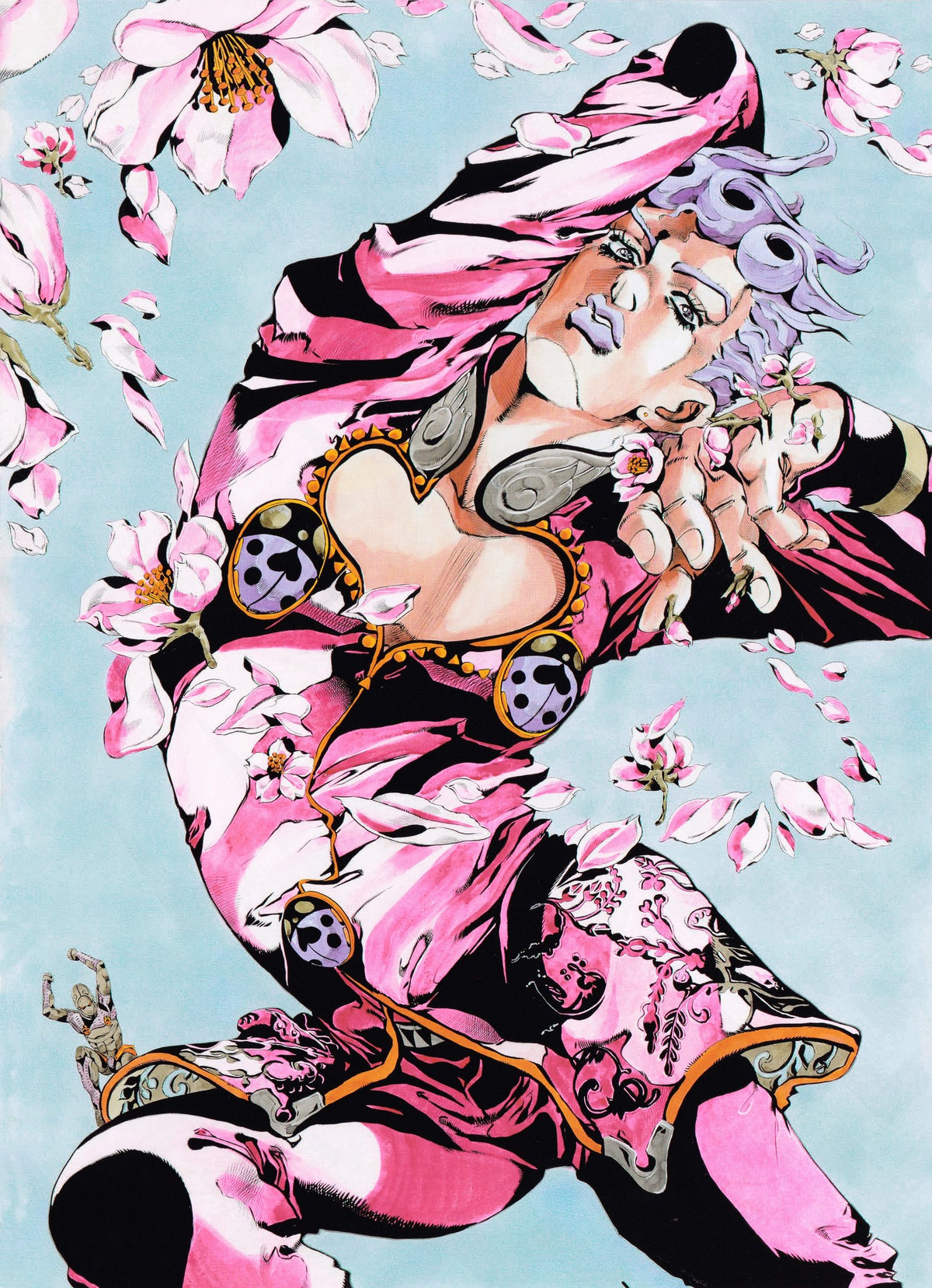
Even though Hajime Isayama was born in 1987, the year that Hirohiko Araki first began publishing the still-running JoJo’s Bizarre Adventure (JJBA), and even though the two seem to embody very different styles of manga and storytelling, Isayama has stated Araki’s series is one of his favorites.

Other favorites include Berserk, Project ARMS, and Kingdom, but JoJo’s Bizarre Adventure stands out because of how different it is from Attack on Titan (AoT), and the unique qualities they share. From looks alone, AoT and Isayama are focused on political warfare and create a somber world filled with despair, while Araki fills the world of JJBA with light, color, and theatricality.
Look a layer deeper, and you can see that as both Araki and Isayama continue with their stories, they concern themselves more and more with different aspects of the human form. Araki moved away from hyper-muscular men and more toward a high-fashion aesthetic, focusing on contortion and poses alongside increasingly imaginative stands and powers.

Isayama took AoT on a more philosophical journey, having his characters question the ideas of good and evil while Isayama himself placed a greater emphasis on the nuance in their visual design and facial expressions.
The series are vastly different, but it’s interesting to connect the dots and try to see exactly how JoJo’s Bizarre Adventure’s influence made its way into the AoT story.
Q Hayashida (Dorohedoro) - Multiple
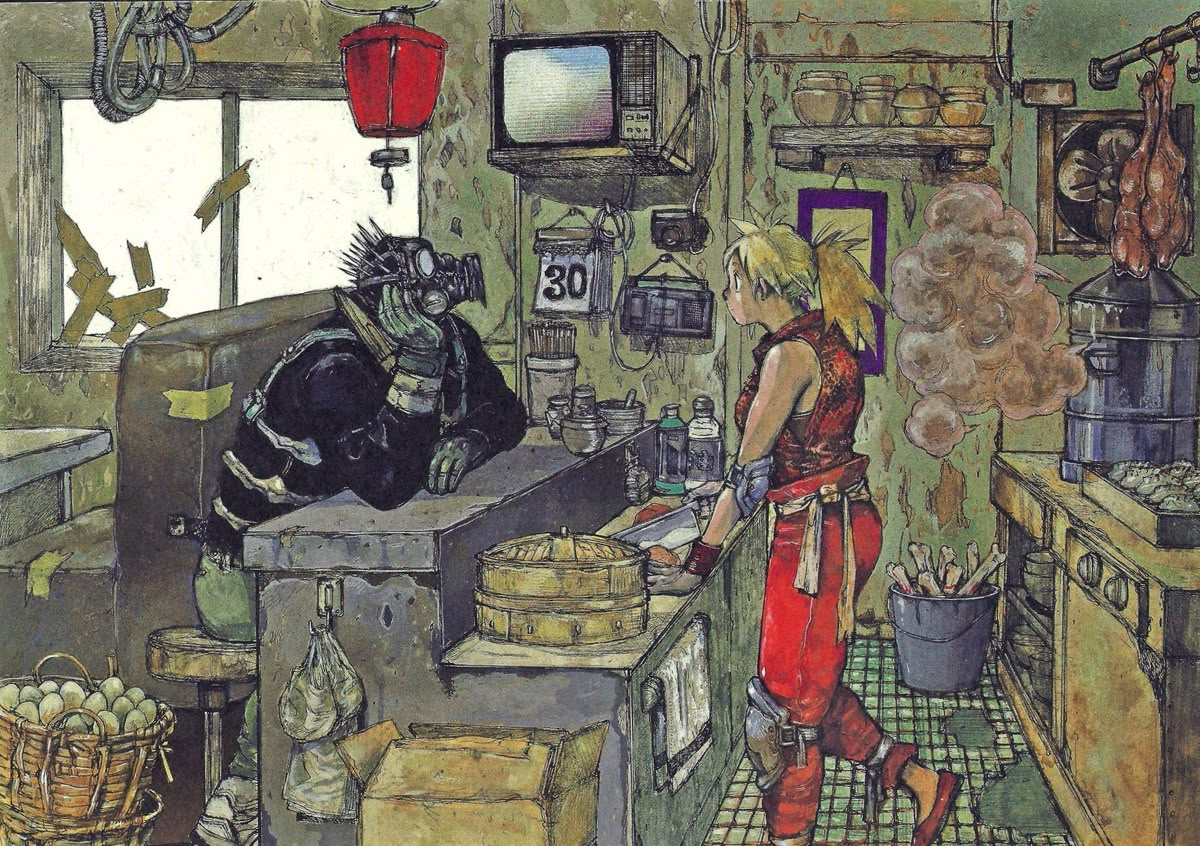
Also known for the recent dirty and industrial Dai Dark, Q Hayashida has not stated one single manga to be her favorite. Instead, she gave a small list of some of her favorites, and it makes so much sense if you’re intimately aware of Hayashida’s style and subject matter.

Hayashida finds the perfect juxtaposition between the dark depravity people are capable of, and the warm sentimentality that also exists within humanity. Jumping between deliberately raw body horror and pure domestic silliness, Q Hayashida doesn’t trivialize anything. Instead, she manages to make readers examine and better appreciate the smaller moments and feelings, the minutiae within our everyday interactions.
Her favorite authors like Kazuo Umezu and Junji Ito, as well as series such as Akira and Shigurui, also place great importance on this constant push-and-pull of darkness and lightheartedness that exists within humanity.

Eiichiro Oda (One Piece) - Dragon Ball
Akira Toriyama and Dragon Ball are seminal parts of manga history. Their impact is indelible, and while they’ve influenced artists and musicians from around the world, they’ve also directly inspired many manga legends of today. Hideaki Sorachi, Hirohiko Araki, Tite Kubo, and Masashi Kishimoto have all heaped significant praise on Dragon Ball and Toriyama, with Eiichiro Oda even saying that it was his biggest influence, the spark that pushed him to become a manga artist in the first place.
"I mirrored many traits and tropes for Luffy off of Son Goku. By far the manga that inspired me the most was Dragon Ball, and I think the same could be said for many other mangaka. But the simple fact is, if there was no Dragon Ball, there would be no One Piece."
Oda, alongside his contemporaries, were either directly inspired by Toriyama or entered into a world of manga and storytelling forged by him and Dragon Ball.

Takeshi Obata (Death Note) - Cyborg 009
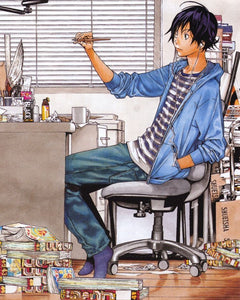
Death Note is just the most popular of Obata’s series, which includes other iconic works like Bakuman and Hikaru no Go, and the series he loved as a child that inspired him to draw and create his own stories was Cyborg 009 from Shotaro Ishinomori.
Ishinomori also created Super Sentai and Kamen Rider, but it was Cyborg 009 in his massive library of works that captivated Obata. Obata read Cyborg 009 over and over as a child, and the timing makes sense as the series began before Obata was born in 1969, and ended when he was 12 years old in 1981.

Other notable manga artists like Katsuhiro Otomo, Go Nagai, Tetsuya Chiba, and Taiyō Matsumoto have all cited Ishinomori as a major influence, and when you look at the actual works themselves, you can see why. Ishinomori was able to pair the 1960s cartoon style of illustration with incredibly in-depth and realistic background detail, while effectively contrasting light and shadow in such a vivid and tangible way.
Obata similarly places a great importance on fully-realizing background elements and heavily contrasting his illustrations with light and dark, but he also wears his Ishinomori influence on his sleeve with his iconic character designs. From Hikaru Shindo to L and Ryuk, all the way to Tokijirou Kaizou in one of his first series, Cyborg Jii-chan G (likely inspired by Cyborg 009), much like Ishinomori, Obata’s characters are iconic to the point where they feel real.

Naoki Urasawa (20th Century Boys) - Osamu Tezuka
Known as “the Godfather of manga,” even if Osamu Tezuka is not a manga author’s “favorite,” he’s someone whose influence is undeniable. Credited with turning manga from something akin to a comic strip in a newspaper to a medium capable of incredible narrative depth and drama, Tezuka laid the foundation for the world of manga that would give birth to legends of the industry, authors like Naoki Urasawa.

Other manga authors have similarly tread through the same waters as Tezuka, but Urasawa may be the most similar. From the grounded and realistic worlds brimming with psychological tension and cinematic storylines to the humanistic themes, Urasawa and Tezuka are certainly cut from the same cloth. Or, at the very least, Urasawa has stated Tezuka to be a foundational childhood hero, someone whose contributions and mastery of the form invites endless flattery and imitation.

Inspirations on Top of Inspirations
One of the most beautiful things about manga, about art in general, is that you can intently focus on the minor details of a specific manga panel, zoom out to examine the chapter and the manga itself, or you can take a wider perspective and analyze the larger cultural context of a piece of work, how it exists within a single artist's oeuvre or the larger artistic canon.
Art and expression will never exist in something like a vacuum, where meaning solely exists on the page. Instead, it is forever bound to both the context in which it was created and interpreted. There are more than a few ways to interpret this maxim, and I think the best way is to take it as a challenge. Every manga you read, every creator you like, should serve as inspiration for you to untangle the web it emerged from and helped create.