






Some series leave an indelible mark on the cultural zeitgeist and stay relevant for years, or at the very least, come to define an era. Something like Dragon Ball, which began in 1984, changed the landscape of manga, anime, and shōnen. Now 40+ years later, it has continued in one form or another, and people are still talking about it.
Other series are more closely tied to the specific era they’re a part of, like Yu Yu Hakusho and Sailor Moon in the 1990s or Bleach, Death Note, and Code Geass in the 2000s.
Konjiki no Gash!! in Japan, Zatch Bell! ran from 2001 to 2007, and it is the quintessential 2000s series. Unfortunately, production and localization issues hurt the series' ability to gain steam in Japan and the West.
No, Zatch Bell didn’t reinvent the shōnen genre, but it did do everything right within this framework. The result? Something special that, in hindsight, might be one of the better series of the 21st century. At the very least, it should be a series that’s remembered rather than forgotten.

The Premise of Zatch Bell
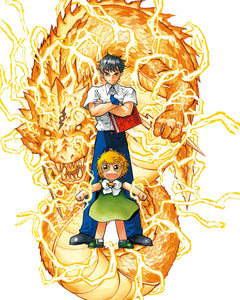
Kiyomaro (Kiyo) Takamine is a 14-year-old genius introvert who isolates himself. He thinks his intellect makes him better and more valuable than everyone else, but the arrival of his complete opposite, someone who is incredibly emotionally intelligent, empathetic, and simple, quickly challenges this worldview.
Zatch Bell (Gash Bell in the original Japanese) is a Momodo child, 1 of 100, sent to Earth to fight in a tournament to decide the next Momodo king. This happens once every 1,000 years, and each child has a preordained human partner. The Momodo child is essentially a weapon, and the human partner reads spells from their respective spellbook when battling other Momodo, hoping to destroy their book and send them back to the Momodo realm.
Each Momodo has their own perspective on governance and how they would want to rule. Some started the tournament aggressive and violent, hunting the other Mamodo to get one step closer to a sovereignty defined by malice. While Kiyo is initially rude and dismissive of Zatch’s antics and childishness (he’s basically a 6-year-old boy), the two grow close and Kiyo evolves, becoming someone who will do everything he can to help Zatch win and become a “kind king,” the one who will stop these battles for good.

This outlook means that Zatch and Kiyo don’t just look for other Mamodo to battle and defeat. Instead, they befriend and ally with other Mamodo. Others, they do what they can to help. Some, they form a deep rivalry with.
Shōnen Done Right
The beginning of the series is more villain-of-the-week encounters where, for a chapter or two, Zatch and Kiyo meet another Mamodo and their partner, and they end this encounter one step closer to their goal. Typically, they have a new ally, or one less Mamodo trying to stop them.
Progressing farther into the story, the series introduces some grander villains and storylines, like Zofis. Their plan to become king is to reanimate Mamodo from the previous tournament and brainwash them to fight for him.
The next arc sees Zatch’s own twin brother, Zeno Bell, taking control of a cyborg mecha and sending it to destroy all of Japan.

These story arcs and the characters of Zatch Bell are not revolutionary in the world of shōnen. But they do hit all of the standard beats of a shōnen in just the right way. Some of Zatch Bell’s contemporaries may be more stylish and visually unique; others may have more twists and turns; but Zatch Bell more than makes up for this in personality and earnestness.
Shōnen Characters You Can Root For
In addition to the series having a consistent and understandable logic, Zatch Bell doesn’t forget to flesh out the different characters, giving them goals and motivations that make sense in the shōnen genre without going too far into the realm of sappy melodrama. Sherry Belmont and her Mamodo-partner Brago are the perfect example of this.

Both appear very early in the series and are the ones to actually explain the Mamodo tournament to Zatch and Kiyo (Zatch lost his memories so didn’t know anything). Brago is kind of an antihero Mamodo; emotionless and powerful. Sherry is his perfect match; cold-hearted and determined to make Brago king. She’s a lot like Kiyo at the beginning of the story, and the duo is actually about to eliminate Zatch from the tournament and kill Kiyo before showing them mercy after seeing Kiyo’s resolve to protect Zatch and keep fighting.
Sherry and Brago are one example of many characters in the series who you can immediately understand has more going on with them than meets the eye. Then, these characters naturally develop as the story progresses, and the layers reveal themselves.
Why It Ultimately “Failed”
From the beginning to the end of the series, you have a good idea of where the story is going and how the characters will grow. If the story payoff is earned, the development is entertaining, and the fights are fun, why would some say that Zatch Bell failed? Why was its presence in the West minimal, and why did it disappear in Japan after selling well and spawning multiple video games?

Series author Makoto Raiku was publishing Zatch Bell in Shogakukan's Shōnen Sunday Super magazine. Like other manga artists tied to a weekly production schedule, Raiku toiled away for years and ended up sacrificing his own health and sanity to meet deadlines.
Continued production was not easy, and in 2005, Raiku fractured his wrist, and the series went on break for several months. There is a lot of speculation that he hurt his hand by slamming it on his desk amidst the exhaustion and stress of the time.
Toei Animation was releasing its anime adaptation of the series weekly at this point, and because of the break, caught up to the manga. Raiku provided them with rough drafts of where the series was going so they could continue the series, but this led to some wildly different plot points, culminating in the anime ending in 2006 while Raiku went back to writing the manga (and creating some of the best double-page spreads I’ve ever seen).

After completing the series in 2007, Raiku sued Shogakukan after they lost original copies of artwork related to the series. Raiku and Shogakukan settled for ¥2.55 million, and Raiku also won the rights to the series.
While these issues hampered production of the anime and localization efforts outside of Japan, localization and censorship had already not been doing any favors to the source material.
The name “Mamodo” itself was a localization change of the Japanese word “mamono”, which roughly translates to monster/demon. Kiyomaro changed to Kiyo, Gash changed to Zatch, etc. After the lawsuit, Shogakukan ceased the overseas translation and continued publication in Japan. At this point, the English dubbing of the anime also stopped.
Troubled production and lawsuits have essentially erased Zatch Bell from getting any official recognition in the West as well as Japan, but in 2022, that began to change.
Zatch Bell in the 2020s
While Zatch Bell seemed to have left the cultural memory of manga and anime in the 2000s, people are beginning to remember it, and that’s largely due to Raiku beginning his continuation of the series in March of 2022, Konjiki no Gash!! 2.

After ending the original series in 2007, Raiku would work here and there on other series like Animal Land, and then in 2018 he began his own digital manga publishing company, Birgdin Board. It was under Birgdin Board that he began the Zatch Bell sequel which takes place 13 years after the original.
The characters are older, the stakes are higher, and Raiku still knows how to make his artwork shine on the page. There are only 42 chapters at this point, but it is releasing regularly, and this renewed attention has many reevaluating the original series’ place in manga/anime history.
While we can’t go back in time and make Zatch Bell have more cultural relevance while it was releasing in the 2000s, we can look retroactively and make sure its successes and influence are not lost to time.
The manga and anime landscape in the 2020s is also home to numerous cultural reevaluations to the point where it’s not wild to say Zatch Ball could earn enough cultural cachet with this sequel series to get an accurate anime, à la Shaman King’s 2021 reboot.